

Three nights into a long weekend at Lake James I woke up at six in the morning with a knot in my neck that took a hot shower and half a pot of coffee to talk down. That was the trip I finally admitted the rolled-up sweatshirt trick had stopped working. I am Frank, fifty-three, and I have been camping out of the back of my SUV for the better part of a decade, so when I got home I ordered the Ivellow memory foam camping pillow before I had even unloaded the tent. I cook breakfast in a cast iron skillet over the fire, I tailgate every home game, and I hate waking up stiff more than I hate cold coffee, so I was not about to spend another fall season trading my neck for a night of comfort.
Over the years I had tried the two standard answers and neither one held up. The inflatable travel pillow packs smaller than a soda can but sleeps like a pool toy, and I spent half the night chasing it across the tent floor. The doubled-up fleece and the rolled hoodie were fine going to sleep, but they gave my neck nothing to lean on, and by first light the stiffness had worked its way down into my shoulders. So I gave the Ivellow a fair run: five trips, two home-game tailgates, and one neighborhood campout where I ended up being the adult in charge of eight tents. Here is what the long-term test actually taught me.
The Quick Verdict
The most comfortable compressible camp pillow I have slept on in a decade of car camping, and the cons that showed up with time were all easy to live with.
Amazon Check Today's Price →Stop Trading Your Neck for a Night at the Campsite
The Ivellow shredded memory foam pillow survived five trips and two tailgates without flattening a millimeter. If you wake up stiff on day two like I used to, today's price on Amazon makes it a cheap experiment.
Amazon Check Today's Price on Amazon →How I've Used It
The first real test was the last weekend in September in the Smokies. Fog rolled in after midnight and the temperature dropped into the mid-fifties, and I lay down on my back on the air mattress without thinking about the pillow at all, which is the highest compliment I can pay any sleep gear. I woke up at seven, rolled over to check on Carol, and my neck just moved. No grinding, no knot, no flat spot where I had been lying for eight hours.
The second test was a home game at the end of October. The pillow rode all day in its carry bag in the back of the SUV, and after breakfast from the cast iron skillet and a few hours standing in the lot with the crew, I climbed into the back seat, fluffed the Ivellow up, and got a genuine twenty-minute nap before the walk to the stadium. That is the moment it stopped being camping gear and started being the pillow I keep in the car.
By the third trip, a blustery November weekend at a state park where the nights got close to freezing, I had stopped questioning it. The shredded foam had not flattened a millimeter. The cover still felt clean after a wipe-down with a damp cloth. And in the morning it compressed into its carry bag in about forty seconds, smaller than my folded rain jacket. That was when I started keeping notes instead of just sleeping on it, and the two trips since have only confirmed what the first three suggested.
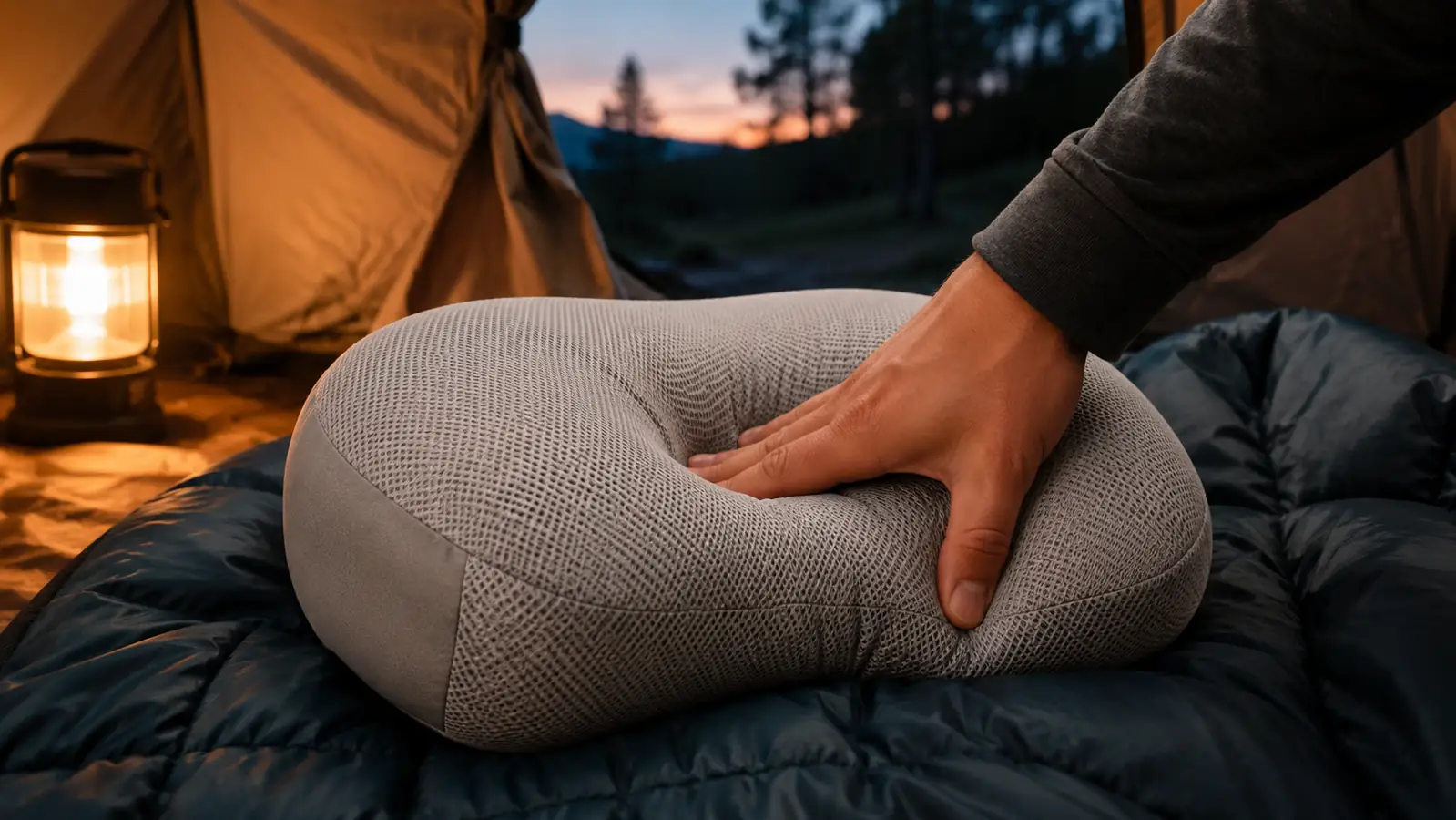
What the Shredded Foam Actually Feels Like
The short answer is that it feels like a real pillow, not a camping pillow. Shredded memory foam gives in sections rather than pushing back as one hard slab the way a solid block does, and it holds the shape you press into it long enough for you to settle. On my back the loft puts my head level with my spine. On my side it firms up just enough to keep my ear from sinking toward the tent floor, and there is enough fill to make a soft pocket under my jaw instead of a hard edge.
It is not identical to my pillow at home, and I want to be straight about that. The deck is smaller, so there is a short adjustment on the first night of any trip. The foam runs a touch firmer under a side sleeper's ear. And the loft sits lower than a plush bed pillow, so if you like to stack two pillows at home you will want a folded blanket underneath or a second one in the duffel. None of that is a defect; it is the difference between a pillow that stays put on a tent floor and one that packs away.
Halfway through the second trip I realized I had not once woken up mid-night hunting for it on the tent floor, and keeping your pillow where you left it is half the job.
How It Packs and Where It Lives
The Ivellow ships with a compact carry bag, and the real test of a compressible pillow is whether the bag actually does the compressing. This one does. You fold the pillow in half, roll it the way you would a sleeping bag, and push the air out as you feed it into the bag. Mine ends up about the size of a loaf of bread, and it has lived in the gear tote between trips in the corner that used to hold a rolled-up sweatshirt.
The audience this site is written for drives to the campsite, so a palm-sized pillow is not the goal. The goal is a pillow that goes from fully fluffed to out of the way in under a minute and holds its loft through a weekend. An inflatable does pack smaller, and I will say that plainly, but it trades support for that size. If you carry everything on your back, the inflatable makes sense. If you drive, the Ivellow packs small enough that the trade is not worth making.
The Trip Log: Numbers From a Full Season
Between late September and March I slept on the Ivellow fourteen nights across five trips and one home-game tailgate, and I kept a written log the way I do for anything I review. The coldest night read thirty-nine degrees on the dashboard of the SUV, and I slept on my side with the tent wall brushing my shoulder; the pillow stayed under my ear all night, and I woke up without the usual knot in my rear deltoid. The rainiest weekend had us breaking camp wet on a Sunday morning, and the only casualty of that trip was my patience, not my sleep. Nights on the air mattress, nights on the back bench seat, one night on the guest room floor at my sister's place after a late drive home; the pillow behaved the same in all of them, which is exactly what a long-term holder should do.
The number that convinced me is the one that does not show up in any review photo: the pillow weighs the same in its bag today as it did the week it arrived. I put it on the kitchen scale before the first trip and again before the fifth, and it read the same both times, about a pound and a half. Cheap foam packs down and stays down, and by trip three you are sleeping on a pancake. This one still rebounds in about thirty seconds after a good fluff, and that is the single measurement that tells you more than any comfort rating printed on the box.
The Cover and the Details That Show Up With Time
Memory foam claims are easy to make and hard to verify, but the cover is one thing I can tell you about from five trips of use. It has been under my head on warm nights, against a cold tent wall, and against the back seat of the SUV, and it has worn well: no pilling, no loose stitching, no seam that decided to give up. After a dusty trip I wiped it with a damp cloth, let it dry in the sun for an hour, and it looked like new.
The details that matter on a pillow show up in small decisions. The shape is a straightforward travel pillow cut, so it sits flat under your head instead of tilting it forward. The cover is soft enough to sleep on bare, which mattered on the two warm nights we left the sleeping bags open. And the whole thing is light enough that Carol has thrown it in her weekender bag for trips that have nothing to do with camping, which is how it ended up on the guest bed twice.
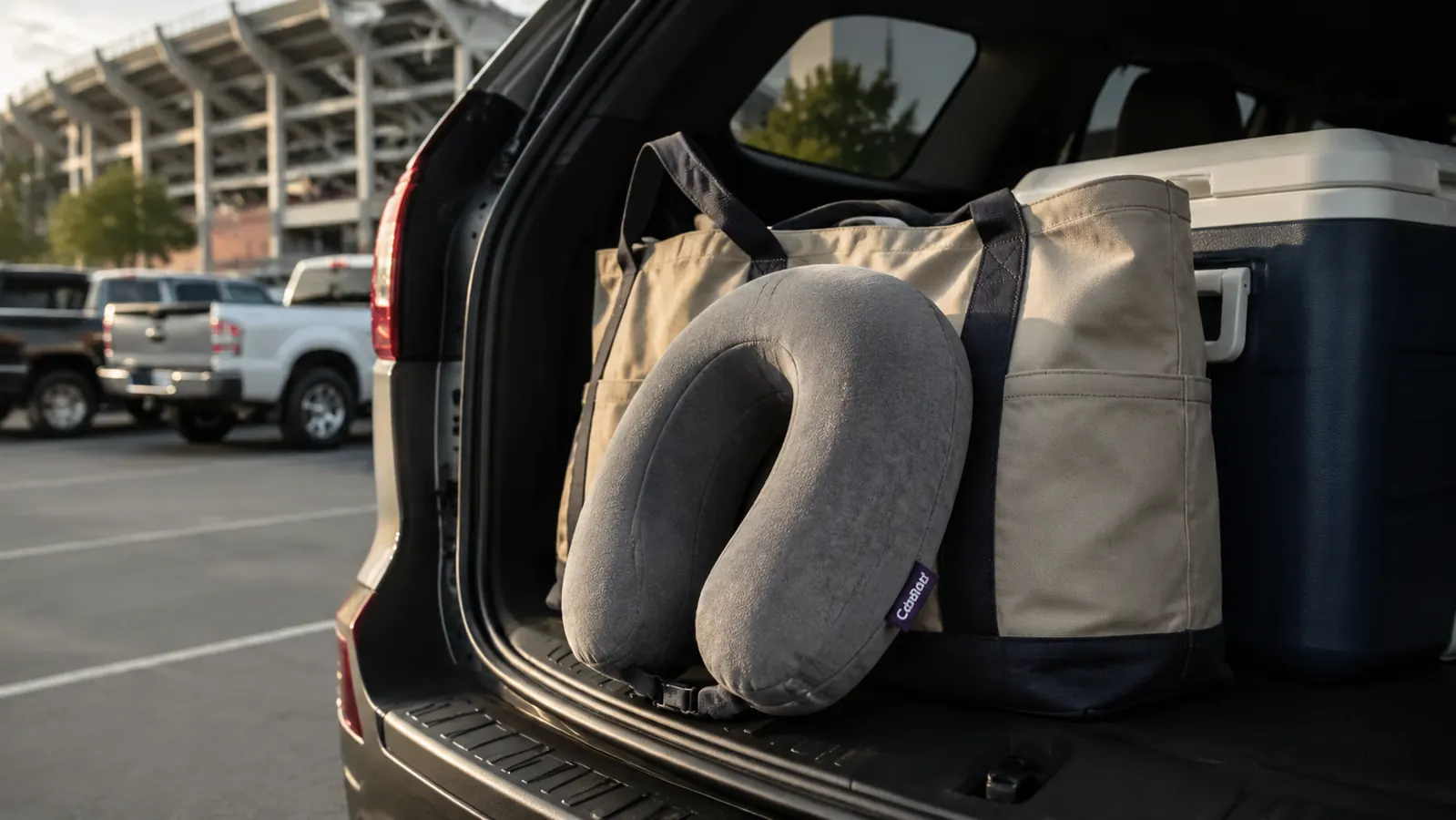
What Started Showing Up by Trip Three
No review of mine is complete without the cons, and there are three, all liveable. The first is the smell. Like most memory foam products, it had a chemical off-gassing odor fresh out of the box, and it took the first couple of evenings of air time to fade. Order it a week before you travel, or leave it open on the kitchen counter before the first trip, and never bring a brand-new foam pillow straight to the tent. I say that from experience.
The second is the loft, which is what it is. People who sleep on a tall plush pillow at home will find this one low for the first night or two, and it does not have the bulk to fill a deep home pillowcase, so use the cover it comes with. The third is a quirk specific to air mattresses: if you set the pillow loose at the head of the bed, it wanders off the edge overnight. Tuck it under the mattress top or hook the corner of your sleeping bag over it and it stays put. I solved all three by the third trip, and none of them made me reach for the inflatable.
What I Liked
- Molds to the curve of the neck instead of pushing back like a beach ball
- Compresses into a compact carry bag that disappears in a gear tote
- The shredded fill held its loft across all five trips with no flattening
- Soft cover that stays comfortable against a bare face on warm nights
- Cheap enough to treat as a try-it-and-see purchase
Where It Falls Short
- Loft runs lower than a plush home pillow and took two nights to get used to
- New-foam off-gassing smell for the first couple of evenings, air it out first
- Does not pack as small as an inflatable, so ultralight hikers should look elsewhere
- Tends to wander off the edge of an air mattress overnight if set loose
The Verdict After Five Trips
Five trips is where I stop calling something new and start calling it gear. By that measure the Ivellow has earned its spot in the tote. It has slept warm and cold, on an air mattress and on the back seat, in fog and in wind, and it has not flattened, shifted fill, or lost the pocket of support I press into it every night. Two of the five mornings I woke up stiff anyway, but both times it was from a night spent in a camp chair by the fire, not from my pillow. That distinction is the whole review in one line.
I have bought a second one since, as a gift for my brother-in-law, who camps out of a truck and had been using a folded coat for years. He reported back after one weekend that he had slept through the night for the first time in memory. If that sounds like your situation, and you drive to your campsites, this is the pillow I would start with, and I would not pretend it is a hard decision.
Who This Is For
Buy the Ivellow if you are a car camper, a tailgater, a cabin renter, or anybody who sleeps on a real pillow at home and wants the same support outdoors. It is for people who pack a proper camp chair, a real cooler, and a cast iron skillet, and who stopped trying to prove something to the ultralight crowd a long time ago. If you wake up stiff on the second morning of every trip and you have been blaming the mattress, the pad, or your age, the pillow is the cheapest variable to fix first.
It is also a fine guest-room pillow and a decent travel pillow for the passenger seat, and it made that neighborhood campout I helped supervise a great deal easier to survive. If you are still on the fence, the ten reasons a memory foam camp pillow is worth packing cover exactly why mine has never left the tote; it is the same logic that sold me before the first trip.
Who Should Skip It
Skip the Ivellow if you are a backpacker counting every ounce, because an inflatable packs smaller and lighter and the loft matters less when you are on your back on a thin pad. Skip it if you need a tall, towering pillow to fall asleep, because the loft here is medium at best, and no folded blanket on top is going to make it tall the way extra pillows at home do. And skip it if you camp once a year and do not mind the stiffness you already know is coming.
There is no point spending on a problem you are willing to keep living with, and that is true of every piece of gear I review. But if your neck is the reason your mornings at the campsite get off to a bad start, this is the cheapest fix I know, and the fix has held for five trips and counting.
That Rolled-Up Sweatshirt Has Done Its Time
Five trips in, the Ivellow is still the first thing I pack after the cast iron skillet. See today's price on Amazon and decide for yourself.
Amazon See Today's Price on Amazon →