

I'll be honest with you. I bought the Ivellow memory foam camping pillow because I was tired of waking up at 5 a.m. at a campsite and not being able to turn my head without a groan. That is the real reason anyone ends up browsing camp pillows at all, and no product listing will ever say it that plainly. What nobody tells you is how the pillow behaves over a whole season, not one night. The first night sold me. The tenth night is where a pillow either earns its spot in the gear bin or quietly gets left home.
Over the last eight months I have used this pillow on twelve tent nights, five truck-bed naps at football tailgates, and a week in the mountains where it rained three of the seven days. I washed it, compressed it, packed it damp after a storm, and let it ride loose in the back of a camper shell. I also kept the boxes from the other pillows I tried so I could compare notes honestly. So this is the review I would give a buddy leaning over the tailgate, not the version the manufacturer would print.
The Quick Verdict
The best camp pillow I have owned for the money, once you accept that it sleeps firmer than a home pillow and takes a few minutes of effort to pack.
Amazon Check Today's Price →Pillow number one: the Ivellow memory foam camp pillow
If you are done waking up stiff at the campsite, this is the pillow that fixed it for me. It is not the cheapest foam pillow on Amazon and it is not the lightest, but it is the one I kept packing for an entire season. Check today's price before your next trip.
Amazon Check Today's Price on Amazon →How I've Used It
I used this pillow on the ground in a two-person tent, on a camp cot, and in the bed of my truck with the tailgate down. Most nights it sat on top of a foam mattress pad and a 3-inch self-inflating pad, which is a fair test because that setup already lifts your body up a few inches and a shorter pillow can leave your neck in a dip. Some nights it was the entire pillow setup, flat on the tent floor under a fleece blanket, because I had forgotten my good pillow at home and the Ivellow was what I grabbed as a spare.
I weigh 205 pounds and I sleep on my side and on my back, usually switching a few times a night. Side sleeping is the hardest test for any camp pillow because it needs enough height to close the gap between your ear and your shoulder, which is a taller pill than a lot of inflatables can manage. The Ivellow is tall enough right out of the bag, and that is exactly why the first night felt as good as it did. It is also where the tuning part begins, and I will get to that in a minute.
I am 56 years old and I refuse to pretend that waking up loose is optional anymore. That is the whole reason this category of gear exists for me. Two years ago I spent a weekend with a rolled-up hoodie under my head and I ached for two days after we got home. That miserable weekend is the baseline I have measured every camp pillow against since, and it matters more than any number in a spec sheet.
The Firmness Truth Nobody Puts in the Listing
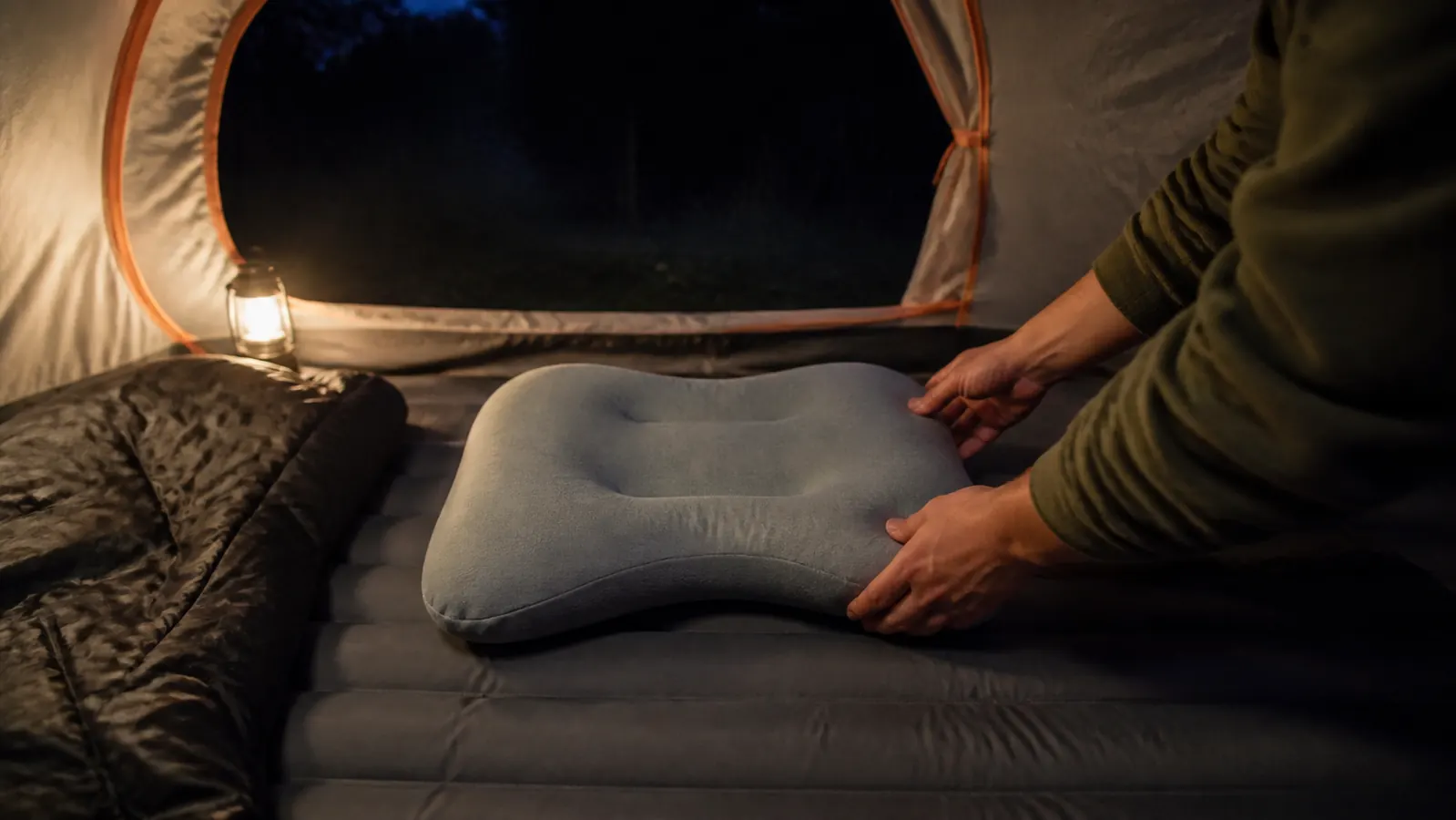
Here is the thing the photographs do not tell you. This is not a soft, sink-into-it feather pillow. Shredded memory foam is dense, and the first time you lay your head down, the pillow feels stiff, almost too full. A memory foam pillow at home has a slow sink to it. This one gives, but it springs back on you for the first few nights while the foam softens up and the little shredded bits settle into a head-shaped pocket.
The fix is simple once you know it, and I did not know it until the third trip. The pillow has a zipper tucked under the cover, and you can open it and pull out a generous handful of the shredded foam, maybe a quarter of the fill, then work the cover back on and zip it shut. Suddenly the pillow sleeps like a normal bed pillow instead of a firm wedge. I keep the extra foam loose in the carry bag. On nights when the pillow feels a touch low for side sleeping, I tuck a little back in. That five-minute adjustment is the single biggest difference between hating this pillow and loving it, and it took me three trips to figure out on my own.
The Smell and the First Night
Nobody tells you this one either. The pillow ships vacuum-sealed and pressed flat in plastic, and it comes out smelling strongly of that new-mattress chemical odor. It is not a spoiled-food smell, just the distinctive smell of freshly cut memory foam that has been sealed up tight. Mine sat on the kitchen counter for two days with the cover off before the smell faded to nothing. If you plan to unbox this at the trailhead and sleep on it the same night, expect to be smelling foam for your first few hours in the bag.
Once the smell was gone, the first night genuinely impressed me. My head stayed put instead of rolling off into the gap at the edge of the mattress pad, which is what always happened with the pillows I had used before. I woke up once around 3 a.m., flipped over, and the pillow was still holding my head where it needed to be. By morning I had no neck complaint at all, and honestly that had not happened on a camping trip in a long time.
One more thing about those first few weeks. The foam softens with use. When the pillow is brand new, the little shredded pieces are stiff and springy, and they hold whatever shape they were squashed into. After about six trips the fill loosens up and shifts the way memory foam is supposed to, which is when the pillow started feeling like a real bed pillow every single night instead of just most nights. If your first night is not perfect, give it a few trips before you decide against it.
Compressing It Is a Small Workout
The listing says compressible and it is, but the word undersells the effort. The carry bag is about the size of a loaf of bread once you finish, which is honestly impressive. Getting there is the trick. You roll the pillow, you squeeze the air out of the foam, you fold it in half and push it into the bag while you pull the drawstring closed with your other hand. It takes two hands, my knee, and about forty seconds of doing it right. I have never once wanted to do it first thing in the morning with a headache brewing.
The payoff is real. Packed down, the whole pillow rides in a tote or wedges into the corner of a duffel without costing you any space that matters. It weighs a shade over a pound on my kitchen scale, which is more than an inflatable, but for car camping and tailgating you will not notice the difference, and in a truck bed it is a nonissue. Backpackers should keep walking right past this one, and I mean that as a compliment to the people it is actually for.
The carry bag itself is heavier duty than I expected, a soft woven sack with a drawstring, and it has held up to a full season of being shoved between totes and dropped on gravel. Stuff bags usually start to fray around the cord lock, but the lock on this one still holds the pillow snug after eight months. That is the kind of small detail that separates a pillow you keep packing from a pillow you eventually sell at a garage sale.
The Cover After a Full Season
The outer cover is a soft knit with a cool-to-the-touch feel on the first lay-down, and it is the part that has changed the most in eight months of use. It pills. Nothing dramatic, but there are little fuzz balls along the seam ridge and the corners where my head rubs night after night. The zipper also sits under the cover on one face of the pillow, and the teeth are firm enough that you feel them if you lay wrong. Sleep with the zipper facing the foot of the bed and you will never notice it.
The cover zips all the way off and is machine washable, and I have washed it twice, once after a faceful of campfire smoke and once after a rainy night. Both washes came out fine, no shrinking, no lost shape, and the zipper still runs smoothly. That was a genuine surprise, because the cover on my old inflatable pillow was cotton glued over PVC and it split at a seam the first time I machine washed it. The sewing and the zipper on this one are the things I would point to if anyone asked me whether the build quality matches the price.

Alternatives I Tried Before This One
I started with the inflatable camp pillows, the kind you blow up to the size of a small loaf and then spend the night feeling like you are on a balloon that is slowly escaping. I keep one in the truck as a backup, but it is my backup for a reason. It packs small, yet it is loud when you shift, it slides on the tent floor, and it collapses the moment you punch the air out of it while you are trying to get comfortable.
I also tried the stuff-sack pillow you fill with spare clothes, which works right up until you actually need those clothes to stay dry in the rain. And I tried the folded-sweatshirt method, which is just admitting defeat before you even climb into the sleeping bag. The Ivellow is the first camp pillow I have owned that I would hand to a guest at the campsite without apologizing for it. That is the whole review in one line, honestly.
The Price Question Nobody Wants to Ask
Here is the question I get asked most once someone at the campsite picks this pillow up and squeezes it: is it really worth buying instead of just grabbing the cheap inflatable sitting in the checkout aisle of the sporting goods store? My honest answer is yes, and here is the math that convinced me. I used an inflatable for two seasons and replaced it twice when the baffle seams burst. The Ivellow has now outlasted both of those inflatables and it still sleeps exactly the way it did the day I tuned the fill, which means the cost per night keeps dropping on every single trip I take with it.
That is the whole argument for spending a little more on a pillow made of actual foam instead of air. The shredded foam does not burst, does not need patching, and does not go flat on you at 2 a.m. when a seam gives out. Check today's price before you decide, because it moves around from week to week, but in my book this pillow already paid for itself by the fourth trip. I keep waiting to find a real reason to stop using it, and the only reason I have come up with so far is that I wish I had bought two.
What I Liked
- Real pillow height and support on the first try, no inflation, no pump to pack
- Zipper under the cover lets you remove or add shredded fill to tune the loft
- Cover zips off and machine washes without shrinking, survived two washings fine
- Compresses into a small carry bag that rides in any tote or duffel
Where It Falls Short
- Sleeps firm and overly full until you pull some fill out, which took me three trips to learn
- Strong new-foam smell out of the box, needs a day or two to air before first use
- Compressing it back into the carry bag takes two hands and effort
- Heavier and bulkier than an inflatable, completely wrong for backpacking
By morning I had no neck complaint at all, and honestly that had not happened on a camping trip in a long time.
Who This Is For
This pillow is for the car camper, the tailgater, the person who sleeps in a tent three to ten nights a year and wants those nights to feel as close to home as the rest of the trip already does. If you sleep on your side, if you wake up stiff on the second morning, if you have a truck bed or a tote with room for something loaf-sized, this is a genuine upgrade. If you nap in the truck bed at halftime like I do, it is the difference between enjoying the second half and watching it through a fog. Buy one for yourself, take it on a single trip, and then order a second so nobody at your campsite has to fight over it.
Who Should Skip It
Skip it if you are a backpacker counting every ounce, or if you need a pillow that packs down to the size of your fist. Skip it if you hate a firm pillow on principle, because even with a quarter of the fill pulled out, this sleeps firmer than a hotel feather pillow. And skip it if you expect instant comfort with zero setup, because the break-in days and the loft tuning are real and they take a bit of patience. If all of that sounds like too much work, an inflatable is the easier answer. You just trade the comfort for the convenience.
Still sleeping on folded up sweatshirts?
Stop fixating on the mattress for a minute and fix the part under your neck. The Ivellow memory foam camp pillow is the upgrade that got me through a full season without one stiff morning, caveats and all. Check today's price and see if it is in stock before your next trip.
Amazon Check Today's Price on Amazon →