
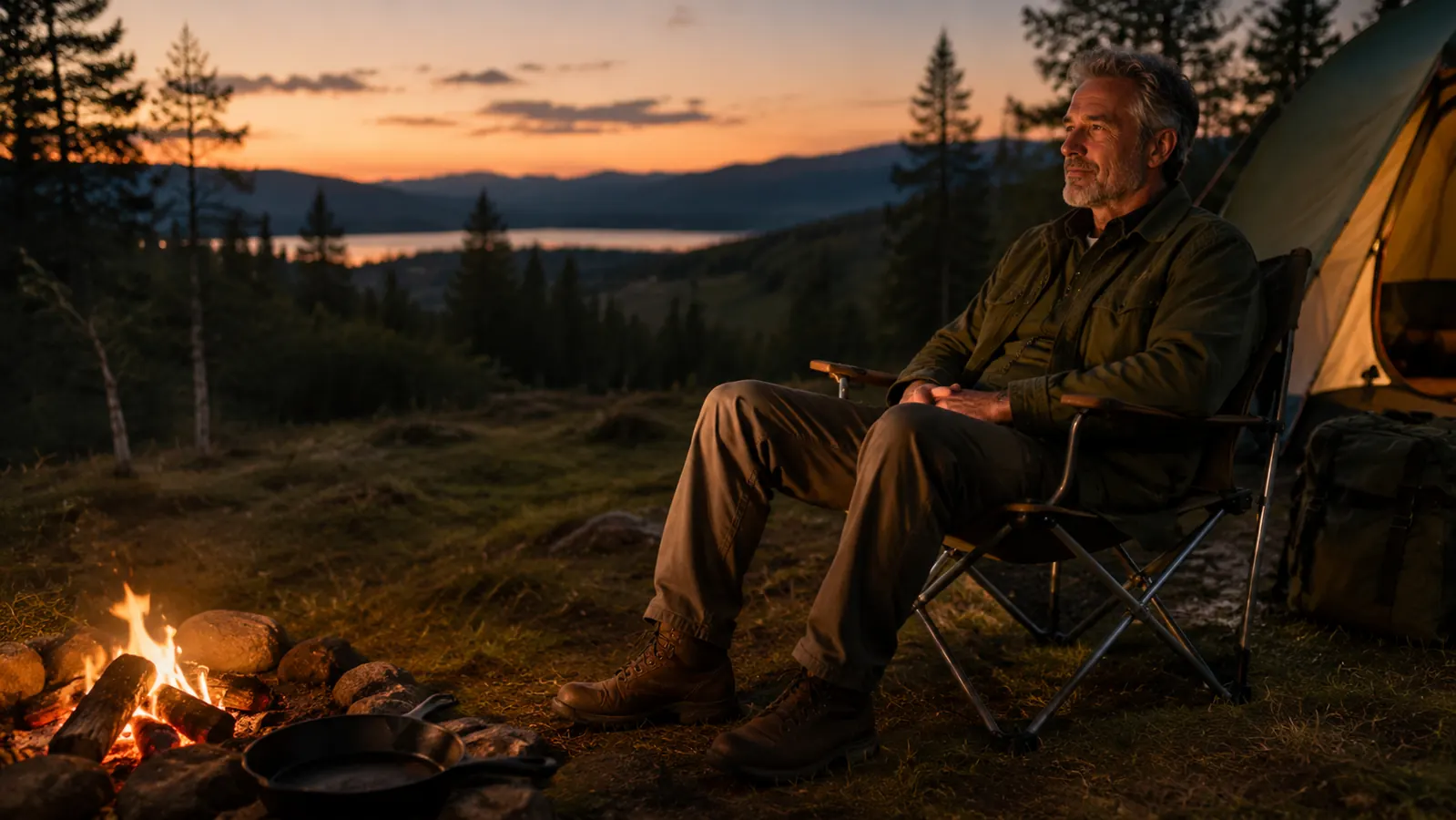
You know the feeling, because you have lived it at least once. Fifteen minutes into the first quarter, or one hour into the first morning at the campground, and the lower back starts talking. You shift, you cross a leg, you fold a sweatshirt behind you, and by the end of the day you are climbing out of the truck like a man being pulled apart at the waist. I did that for years and blamed the long drive, the cold ground, and simply getting older. All of it was true and none of it was the actual problem. The problem was the seat, and the fix starts with the Coleman chair I now put in the truck for every camping trip and every home game.
The move a camp chair makes on you is sneaky. Most are built to feel like a gentle recline with a drink in your hand, and they get there by setting you low and tipping you back so the hips sink below the knees. That rolls the pelvis backward, flattens the curve in the lower back, and hands you a posture your spine can hold for about ten minutes before it starts complaining. I sorted the fix across two seasons of camping weekends and six home games, and the answer is built around the Coleman 4-can cooler chair. Here is the full setup, step by step.
The chair that has carried two seasons of game days and camp nights
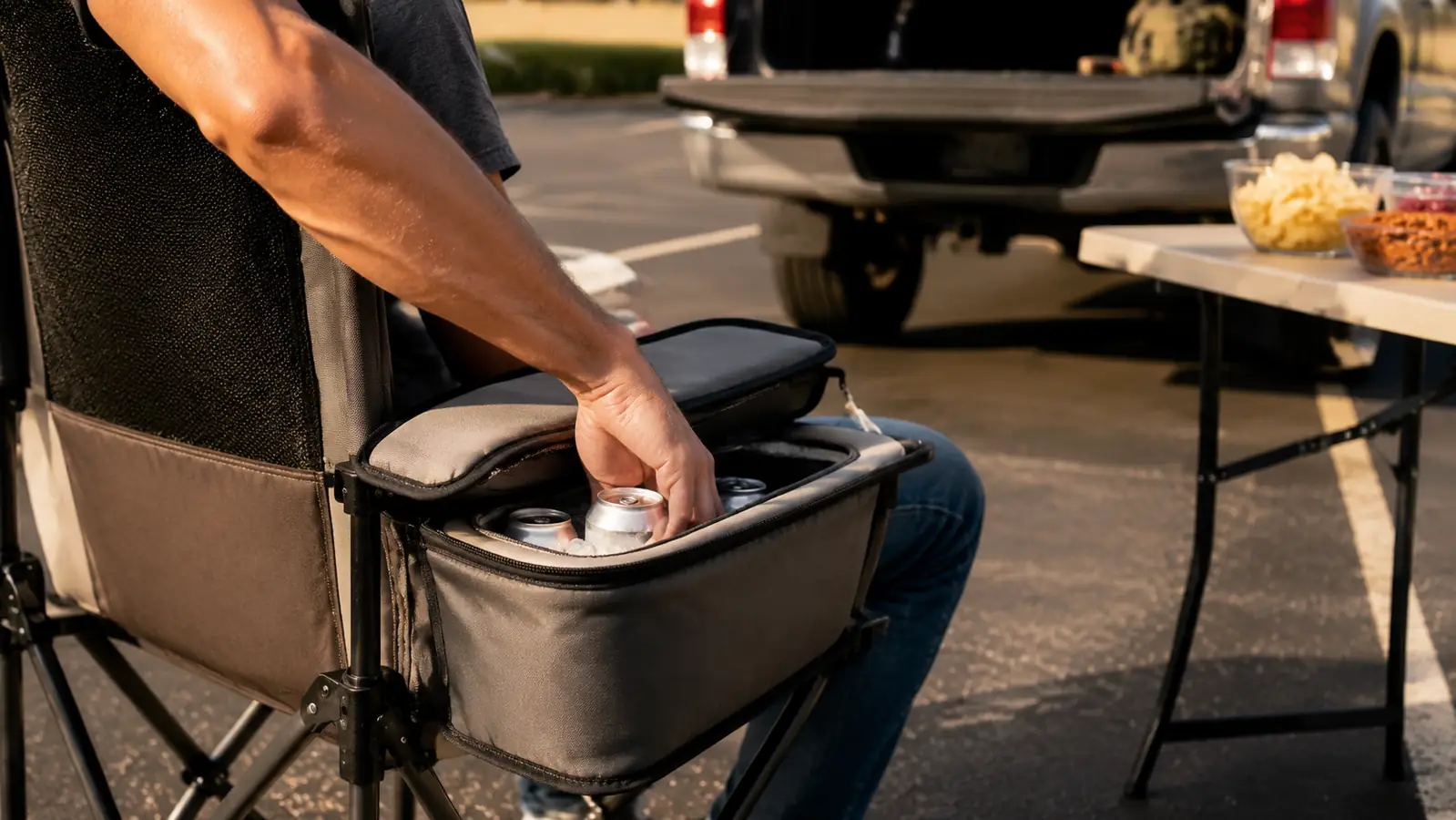
The Coleman 4-can cooler chair puts your hips at a useful seat height with a cushioned seat, a back that rises past your mid back and catches your lower back, and a cooler built into the armrest so a drink never costs you a reach to the ground. It has been my standard seat for two years now, and it is the one chair I would buy again this week.
Amazon Check Today's Price on Amazon →Step 1: Get Your Hip Line Up to Your Knees
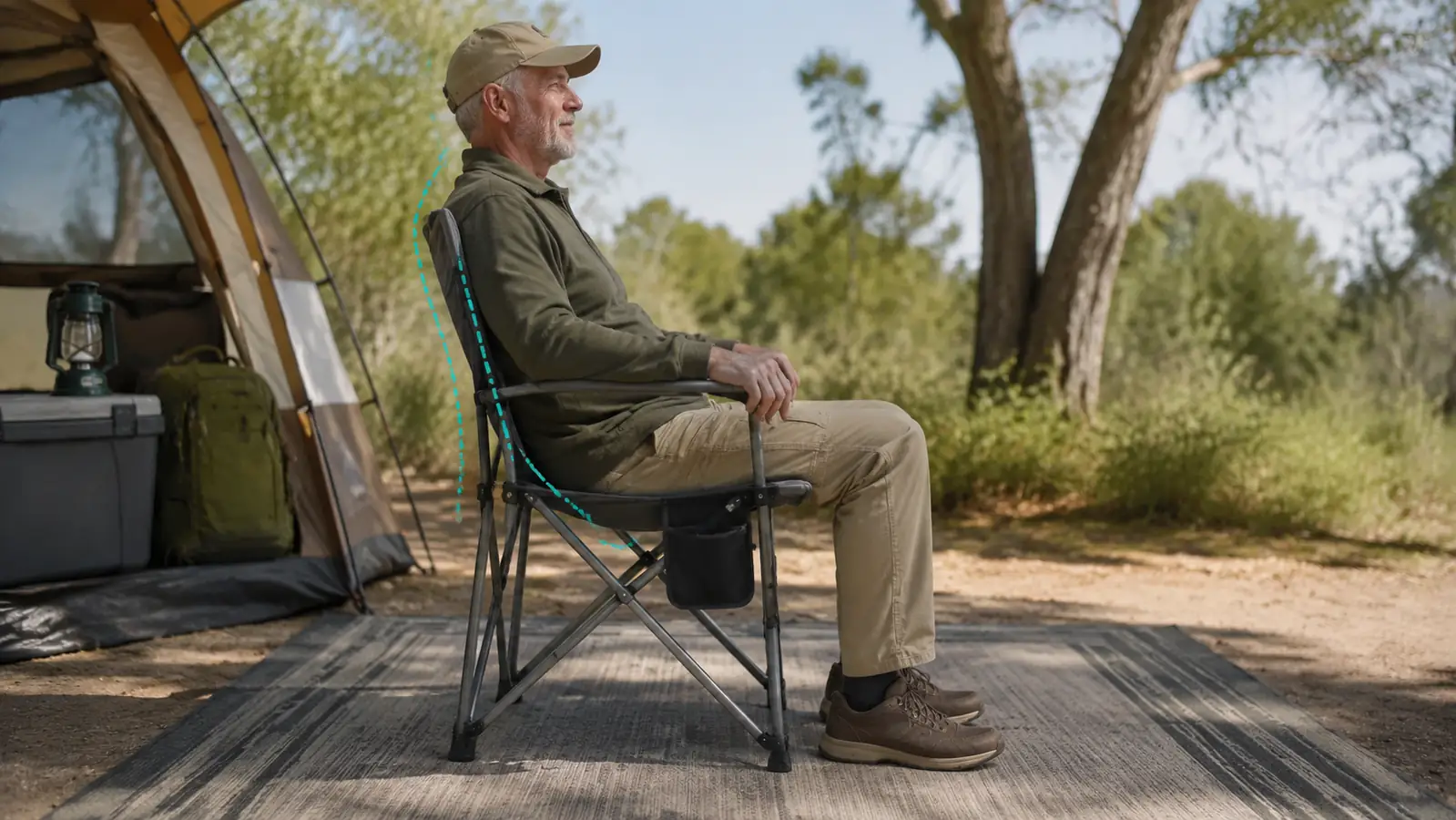
The single most important change I made was getting my knees level with my hips. When your hips sit lower than your knees, your pelvis rolls back and the lower spine loses its curve, and then the back muscles have to grip in for the whole afternoon just to keep you upright. When the knee line comes up to the hips, the pelvis tips forward on its own, the natural curve of the lower back returns, and the back stops being the muscle that holds everything in place.
Test any chair before you trust it. I pull one out, sit down, put both feet flat, and take a look at my knees. If they are higher than the hips, that is a lounger, and a lounger is fine for a short nap and hard on you for the whole game. The Coleman seats me with my hips right around the height of my knees, and that geometry alone has done more for my back than every stretch I have ever been taught.
If the chair you already own sits you too low, do not throw it out. A firm, flat camp pad will lift your hips a solid two inches, and that is often enough to change the whole afternoon. I keep a spare foam pad in the truck for friends who bring the low chairs, and I watch them sit two inches taller the moment their hips come up where they belong.
Step 2: Plant Your Feet Flat on Real Ground
Feet matter more than people give them credit for. You can have a well built seat and still wreck your posture by letting the feet dangle, or by crossing a leg for forty minutes at a time. The spine does its best work from a stable base, and a stable base starts with both feet flat on the ground and square under the knees, where they can carry some real weight.
At the campsite, that means clearing the stones from under the chair and sitting on the flat. At the parking lot, the asphalt does the work. The simple trick I use all day is this: whenever I catch the slump starting, I plant both feet, press down through the ground a little, and the spine lifts right back up. It is an instant posture fix that costs nothing, and you can do it without thinking.
The one trouble spot left on my list is a chair that sits a little tall and will not let the feet reach flat ground. I sat that way for a whole weekend once and spent every meal rocking side to side to stay put. If the heels will not land, keep a small crate or a folded camp pad under the feet so they stay planted and the knees stay open. It looks fussy, but a low footrest hands a good chair back its full afternoon.
Step 3: Give Your Lower Back Something to Lean Into
A tall backrest only helps you if you actually lean into it. The usual mistake I see at fires and in parking lots is perching on the front edge of the seat, spine hovering in front of the backrest and holding the whole day up with tension. Sit all the way back so your lower back rests against the panel and the chair carries the load. The back of the Coleman rises behind me and the cushioned panel takes the pressure, which lets my own back muscles relax instead of cling.
If your chair has a back that ends too low and leaves the lower back floating, there is a short fix. Roll a sweatshirt or a camp towel into a firm log, slide it low behind you at the belt line, and let the backrest press it into your spine. It is the same trick physical therapists use for an office chair, it costs nothing, and you will notice the difference within the first hour of sitting.
One more habit is worth stealing: when you first sit down, do it with intention for ten seconds before the slouch arrives. Drop the shoulders down from the ears, press the lower back into the panel, and find the spot in the seat that leaves no tightness in your neck. That small pause at the top of every sit sets the default for the whole afternoon, and it beats any back gadget I have ever tried.
Step 4: Set the Chair Level and Use the Armrests
A chair can only hold a good shape if the chair itself is level, and most campsite and parking lot ground is not. Take the extra ten seconds to settle into the flattest spot you can find. If the site is on a real slope, slide a flat rock or a chunk of firewood under the low leg until the seat stops tipping to one side. What you want is a chair that tilts back and holds you evenly, without a lean pulling one shoulder down all afternoon.
Then make the armrests work for you. When you get up, set both palms on the armrests and press down, so your arms do the lifting instead of the lower back doing all the straightening. The same rule covers the food: keep plates at belly height so you are not reaching forward and down for every bite. Every reach into a low table plants the same strain right back in the back.
And be picky about what you count as a seat. A five gallon bucket is fine for the twenty minutes a burger finishes, but it has no backrest and no arms, so the lower back does every ounce of the work. When I have a long day in front of me, the chair with a full back is the one I keep for myself, and I have stopped giving away the best seat just to be polite.
Step 5: Move on a Schedule, Not When It Hurts
No chair in the world is built for a straight six-hour sit, and this one is no exception. The last and best piece of the system is that I get up on purpose, before the tightness arrives. About every 35 or 40 minutes I stand, walk the length of the campsite or the truck bed, reach both arms over my head, and settle back down. It resets the body the way a halftime resets a team, and it has kept me out of the stiff mornings I used to dread.
It does not even take strong discipline, because the day is already full of reasons to stand. The trip to the stove, the walk around the lot, the refill run to the cooler built into the armrest. All of that is the plan working for you. The fans who brag about six straight hours in one seat are the same ones crawling out of the truck with their hands on their backs at the final whistle.
If the tightness does creep in, here is the stretch that works anywhere. Stand tall, take one step back, soften the front knee, and reach the opposite arm up toward the sky. Ten seconds on each side, no bouncing, and the lower back lets go. You may look a little unusual in the middle of a parking lot full of people, but standing easy after the drive home is its own reward.
And the only equipment the schedule needs is a way to remember it. I use the end of every quarter as the easiest timer. When the teams go to the sideline I stand, take ten steps, reach up, and settle back down. Around the campfire the walk to the woodpile does the timing for me. The way you remember is whatever the day gives you, and the point is the break lands while the back is still fresh, not after it starts to ask for one.
The proof is the drive home. Two hours at the wheel after the final whistle, and I never think about my back once. That is the same ride that used to have me shifting in the seat the whole way back.
What Else Helps
Two small habits stretch this setup further than the chair alone does. First, warm the lower back before you ask it to sit for the entire day. Stand tall, put your hands on the small of the back, and gently arch and release six times. It takes about two minutes before the first kickoff, and it spares you a long fifth hour. I run through mine while the coffee heats on the stove, so it does not cost me any extra time.
Second, if the truck has room, bring a recliner along as the mid day switch. Lying back for thirty minutes after the meal shifts the load off the lower spine and lets it rest, and then you come back to the upright chair refreshed. The upright chair is the one I live in for the whole camping day. The recliner is just the stop that lets the lower back recharge before the sun goes down.
And one low cost habit for the long days: do not sit on bare, hard ground for long stretches. I keep a spare foam seat pad in the truck for the times I end up on a bench, a wooden stool, or the truck tailgate. The rule is simple, put the pad down, sit on it, and the back stays honest for the next hour. A flat seat cushion is heavy weather insurance for the one day the good chair stands out of reach.
Nothing about this routine is complicated. A seat with your hips level to your knees, feet flat and planted, a backrest that catches the lower curve, level ground under the legs, and a walk on purpose every hour. Get those five right and the day ends better than it started, no matter where you parked the truck. That, and the chair I use to make it all hold together, is why I still look forward to every Saturday in the lot and every night at the fire.
Give your back a seat that works a full day
The whole system is built on one foundation: a chair that puts your hips level to your knees, gives your lower back a padded rest, and keeps a drink close in its built-in armrest cooler. The Coleman 4-can cooler chair is the seat I would buy again for every tailgate and every camping weekend, and I would start the setup with it every time.
Amazon Check Today's Price on Amazon →