
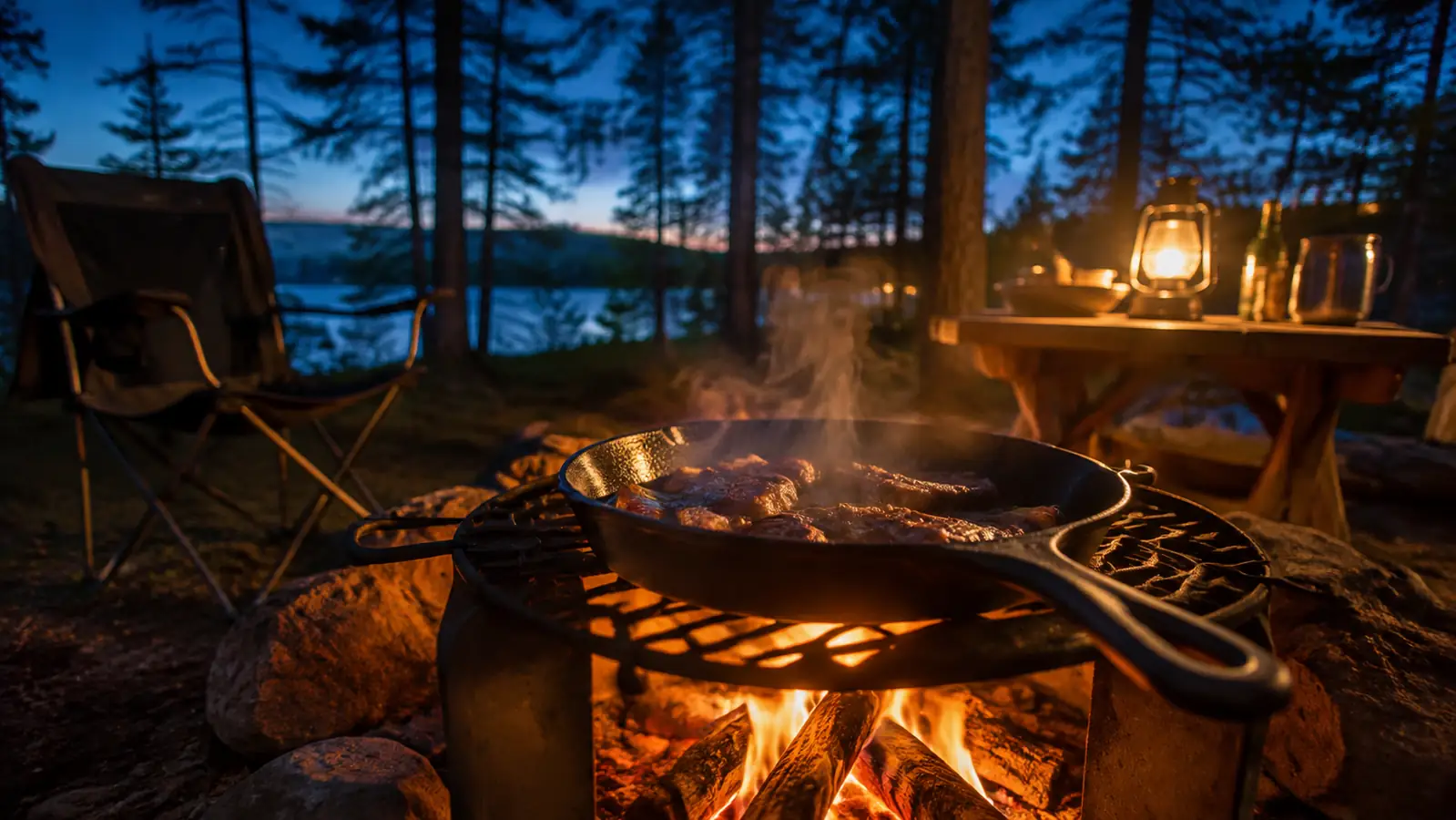
The best meal I ate all last summer was not at a restaurant. It was a Tuesday night at a state park, and the restaurant was a two-burner camp stove balanced on the tailgate of my truck. The kitchen was a single 10.25-inch Lodge cast iron skillet, the sort of pan that weighs about as much as a bowling ball and has a seasoned black bottom you never look too closely at. I had sliced into a steak that rested ten minutes under a loose sheet of foil, spooned the pan drippings over the top, and for the next hour, three people walking past our site stopped to ask what we were cooking.
That has not always been how I eat outside. For years I camped like a man who left his standards in the kitchen. Foil packets that turned chicken into warm soup. Hot dogs scorched black on the outside and cold in the middle. A flimsy nonstick pan that scratched within a season and then stuck anyway, and I finally tossed it in a campground dumpster with more pleasure than I should admit. Restaurant-quality was for anniversaries and date nights, not for pine needles and the smell of citronella. Then I figured out the problem was never the outdoor kitchen. It was the pan.
The fix had nothing to do with a bigger stove, a cast iron Dutch oven, or a pricey burner. It was one Lodge, pre-seasoned and ready to cook the day it arrived, plus five steps I now run on every trip without thinking about them. I have cooked on this exact pan at home, at the tailgate before kickoff, and over an open grate for six months straight, and the routine has not changed once. Here is exactly how I do it, so you can skip the years I spent eating camp soup.
One Pan. Zero Foil Packets.
The Lodge 10.25-inch pre-seasoned skillet is the one pan I pack on every trip. It sears a steak, slides an egg, and goes from camp stove to open fire to my kitchen at home, and it gets better the more you use it. If you are tired of eating like you are on a punishment trip, this is the fix.
Amazon Check Today's Price on Amazon →Step 1: Preheat the Pan Before Anything Goes In
Most campsite sticking is not a seasoning problem. It is a cold pan problem. Throw eggs at a cold skillet and they weld themselves to the iron, and then the pan catches the blame for something the cook did. Restaurant cooks preheat every single time, and that rule travels to the campsite unchanged. It is the most important word in this whole article, so I put it first.
Here is my routine. Set the pan on medium-low, never high, and give it a full five or six minutes before anything touches it. Test it with a single drop of water: when the drop dances across the surface instead of sitting still, the pan is ready. On cold mornings, give it an extra minute or two, because a skillet that slept in the truck overnight comes up slower than the one that lives on your home stove, and there is no shame in waiting for it. This matters more outside, because camp stove flames are uneven and an open fire is worse. Cast iron holds heat better than any other pan I own, so once the surface is hot, it stays hot, even when a cold steak or a pile of diced potatoes lands in it and tries to steal that heat away.
Skipping the preheat is the one mistake I watch people make with a new skillet, and it is the reason I almost gave up on my first one. The pan was fine. I was impatient, and I blamed the iron. Give it the five minutes, and if you take exactly one thing from this article, take that.
Step 2: Cook Eggs That Release Clean
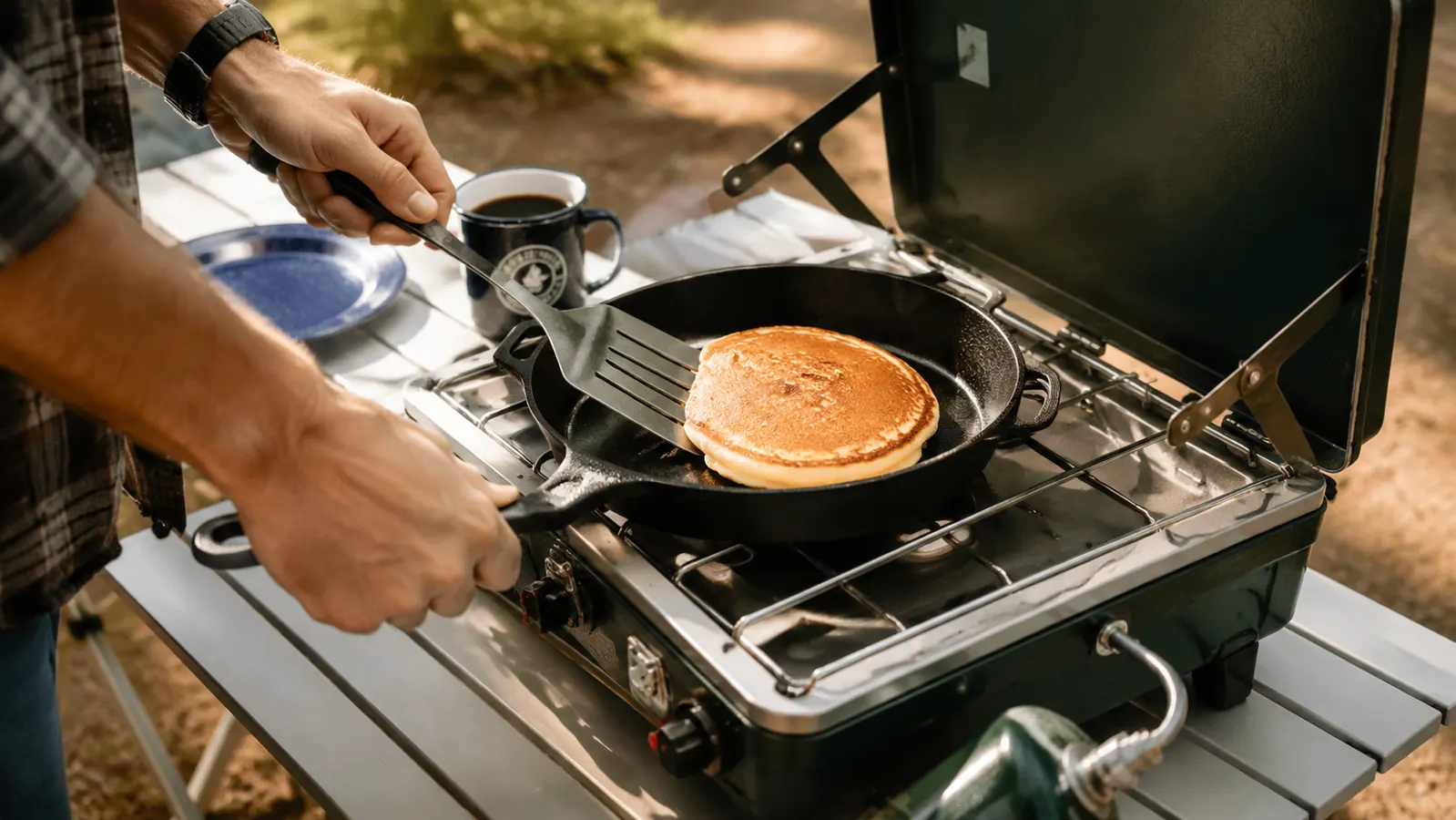
Breakfast is where the pan earns its keep on a camping trip, because anybody can fry bacon, but eggs that slide onto the plate are the difference between a kitchen-grade morning and camp food. Start with a pat of butter or a spoon of bacon fat in the hot pan. Crack the eggs and then do nothing for a full minute. Once the white has set around the edges, the eggs release on their own. There is no prying involved, and the first time it happens, you will be suspicious, and then you will be hooked.
The 10.25-inch surface holds four eggs and a small heap of hash browns without crowding, and crowding is what makes eggs steam instead of fry. If the eggs still grab at the edges, the pan was not hot enough or not seasoned enough yet. That part improves on its own every trip, which is the thing people do not believe until they see it for themselves.
One detail I learned the hard way: pull the pan off the flame the moment the eggs are done. Cast iron holds its heat so well that it keeps cooking after you turn the burner off. Eggs that looked perfect over the fire are overcooked by the time you reach the table if you do not move them first.
Step 3: Sear a Steak, Then Let It Rest
Steak at the campsite is where you stop eating camp food and start eating dinner. Pat the steak dry with a paper towel, salt both sides, and let it sit for ten minutes while the pan heats up. Turn the burner to medium-high and wait for the first thin wisp of smoke. Lay the steak in and then leave it alone for three to four minutes. No poking, no moving, no lifting the edge to peek. Flip it once and give it the same time on the other side.
Then comes the part everybody skips: the rest. Carryover heat finishes the inside while the meat relaxes, so a medium-rare steak stays medium-rare instead of turning gray from edge to edge. Five to eight minutes under loose foil, then slice against the grain. The drippings left behind in the pan become the sauce: splash in a little water or broth, scrape up the browned bits, and spoon it over the top. That single move is the whole trick behind the restaurant version.
This is also the step that won over Carol, who spent years watching me cook steak on a questionable camp stove after one too many foil-packet dinners. One rested steak with pan drippings changed her mind for good, and now she hands me the tongs at the campsite instead of the salt.
Step 4: Build a Whole Dinner in One Pan
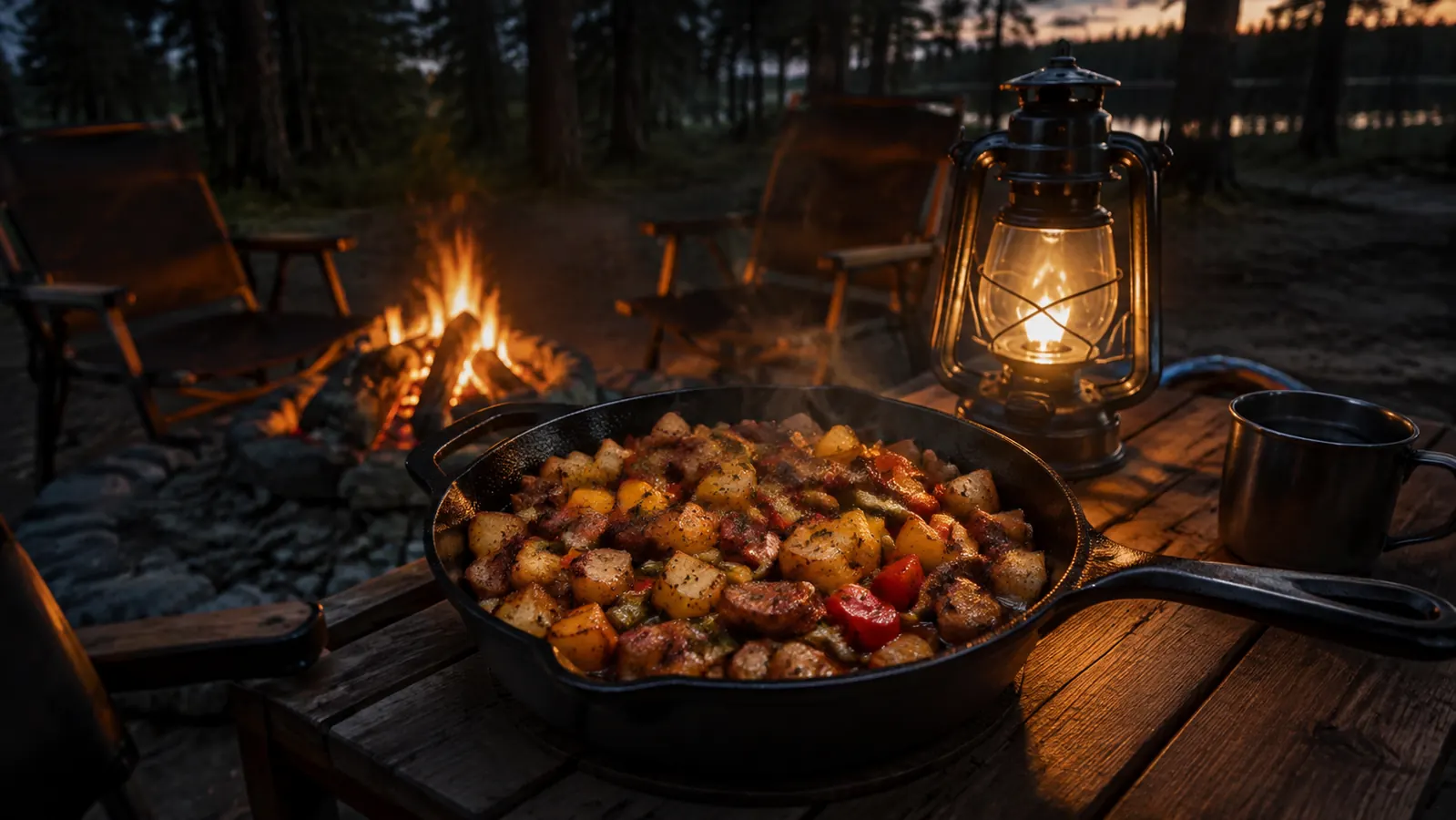
One pan, cooked in order, is the professional move that works on any picnic table. Brown the sausage or chicken first and pull it to a plate. Cook the onions and peppers in the same fat so they pick up the flavor that the meat left behind. Add the potatoes and let them go golden on the bottom before you stir them. Then put everything back together, so each ingredient keeps its own texture instead of collapsing into one gray pot of camp stew.
My standard is a campfire hash: breakfast sausage, potatoes, onion, bell peppers, and a shake of Cajun seasoning, all in the same skillet. It is the meal I make when people wander over and ask what smells good, because it feeds four people with one pan and exactly one thing to wash at the end of the night. I have cooked it over an open grate and on a burner that barely held a flame, and it comes out right either way. Once the potatoes have a good crust on them, I serve it straight from the pan, and plates get filled before the skillet even reaches the table. That is the surest sign of a successful campsite dinner.
The order matters as much as the ingredients. Protein first, then the vegetables that need the longest to soften, then the potatoes, and finally fold the meat back in. Every stage uses the browned bits left by the stage before it, which is why a one-pan meal tastes like more than the sum of its parts.
Step 5: Clean It in Two Minutes Without Wrecking the Seasoning
The reason most people fear cast iron is cleanup, and cleanup is easier than breakfast. While the pan is still warm, scrape out any bits with a metal spatula. Rinse it under hot water. Soap is fine on a well-seasoned pan, though I rarely bother. Dry it over the fire so no moisture lingers, then rub a thumbnail-sized drop of oil over the whole surface with a paper towel. That is the entire procedure.
Two minutes at the end of dinner, and the seasoning gets better every single time you do it. Rust is the only enemy, and the dry-and-oil step is the whole defense. A Lodge outlasts every other piece of gear in my camp box, which is why my long-term review of this exact pan is mostly a story about how little it takes to keep it working year after year.
One warning, and I say it because I learned it the expensive way: do not dump a hot pan into a stream or a bucket of cold water. The thermal shock can warp the iron. Let it cool down first. I made that mistake exactly once, on a different pan, and the wobble it left in the bottom taught me a rule I now follow every single night.
What Else Helps
The skillet does the heavy lifting, but three cheap things make it easier, and all three live in my camp box. A metal spatula, for scraping and flipping. A pair of heat-resistant gloves, because that little side handle gets properly hot and a towel is not a dependable glove. And a lid, anything that fits, for melting cheese on burgers or steaming vegetables. I pack a coil of foil for the lid job and tear off a piece whenever I need one. None of it is specialty gear, and all of it gets used at home between trips, which is the quiet argument for cooking outdoors with the same pan you already trust.
One more thing, and it might be my favorite part: the pan lives in my kitchen between trips. The same Lodge skillet that sears burgers at the tailgate on Saturday cooks Sunday breakfast at the campsite the next weekend, and then comes home and does the week's dinners. If you are still deciding whether a cast iron skillet belongs in your camp box at all, the 10 reasons I wrote are the short version of this whole argument, and they are worth a read before you shop.
I have cooked eggs on this pan at a tailgate in freezing wind and on a camp stove that barely held a flame, and they come out the same every time. That is the whole argument for cast iron: one pan, a routine you can repeat, no surprises.
If you are tired of camp food that tastes like a compromise, you do not need a bigger stove or a fancier cooler. You need one pan and the willingness to heat it up before you use it. A restaurant meal comes down to a hot surface, good fat, and patience, and all three fit in a single cast iron skillet.
Make the Campsite Dinner the Best Part of the Trip
The Lodge 10.25-inch pre-seasoned skillet is the same pan I reach for at the campsite and in my kitchen. It ships pre-seasoned, works on any heat source, and cooks for decades. Check today's price before your next trip.
Amazon Check Today's Price on Amazon →