

The morning after tells you everything. You wake up stiff down your whole back, that crick in your neck from sleeping on a rolled-up hoodie, and you are already dreading the drive home. I have felt it a hundred times. For years I told myself camping just meant bad sleep, that it came with the pine needles and the cold and the neighbors' generator humming two sites over.
I was wrong. Bad camp sleep is not some law of nature. It is almost always the same handful of fixable mistakes: laying your bed on the wrong ground, keeping yourself off the cold in the wrong way, and treating sleep gear as an afterthought instead of the whole point. The weekend I stopped spending nights on a thin pad and started sleeping on the Intex Comfort Plush air mattress, up off the frozen earth, everything changed. I woke up at camp the same way I wake up at home, slow and rested instead of bowed and cranky. Here is the setup that did it, built one step at a time the way I actually do it at the site.
The bed I build every camp night, broken down step by step
I sleep on a raised inflatable mattress so I am up off the cold ground, with a blanket under me and a real pillow under my neck. The Intex Comfort Plush air mattress is the one my wife and I fight over for the high side. It slips into the truck box and inflates with a built-in pump in a couple of minutes. If a good night at camp is the goal, this is the foundation.
Amazon Check Today's Price on Amazon →Step 1: Pick Level Ground and Clear It Before the Tent Goes Up
Every sleeping problem starts below the bed, so start there. Pick a spot that is flat, or as close to flat as the site will give you. I walk the whole footprint and look for the slope before I ever pull the tent out of its bag. A tent pitched sideways is a night of sliding downhill, no matter how good the mattress is. The best bed in the world cannot fix a floor that tips.
Then clear the floor. Cone twigs, acorns, the little rocks that poke through even a good tent bottom. My rule is that if I can feel it through the tent floor with my hand, I will feel it through the mattress at 3 in the morning. Spend the two minutes it takes to rake the worst of it flat. Your back pays the debt for the rest of the night if you do not.
One more thing I learned the hard way: point the head of your bed at the downhill side. Even a gentle slope is more forgiving when your head is slightly higher than your feet. It is the same trick that makes a hillside campsite bearable, and it costs you nothing. I also take one look at the drainage before I commit, so I am not pitching in the low spot that turns into a puddle after a midnight shower.
Step 2: Get Yourself Up Off the Cold Ground
This is the step most people get wrong, and it is the one that matters most. A thin sleeping pad between you and the frozen earth does not keep you warm, it keeps you miserable slightly longer. The cold does not just make you shiver. It makes every muscle in your back seize up, and you spend the night curled into a ball trying to preserve heat instead of actually sleeping.
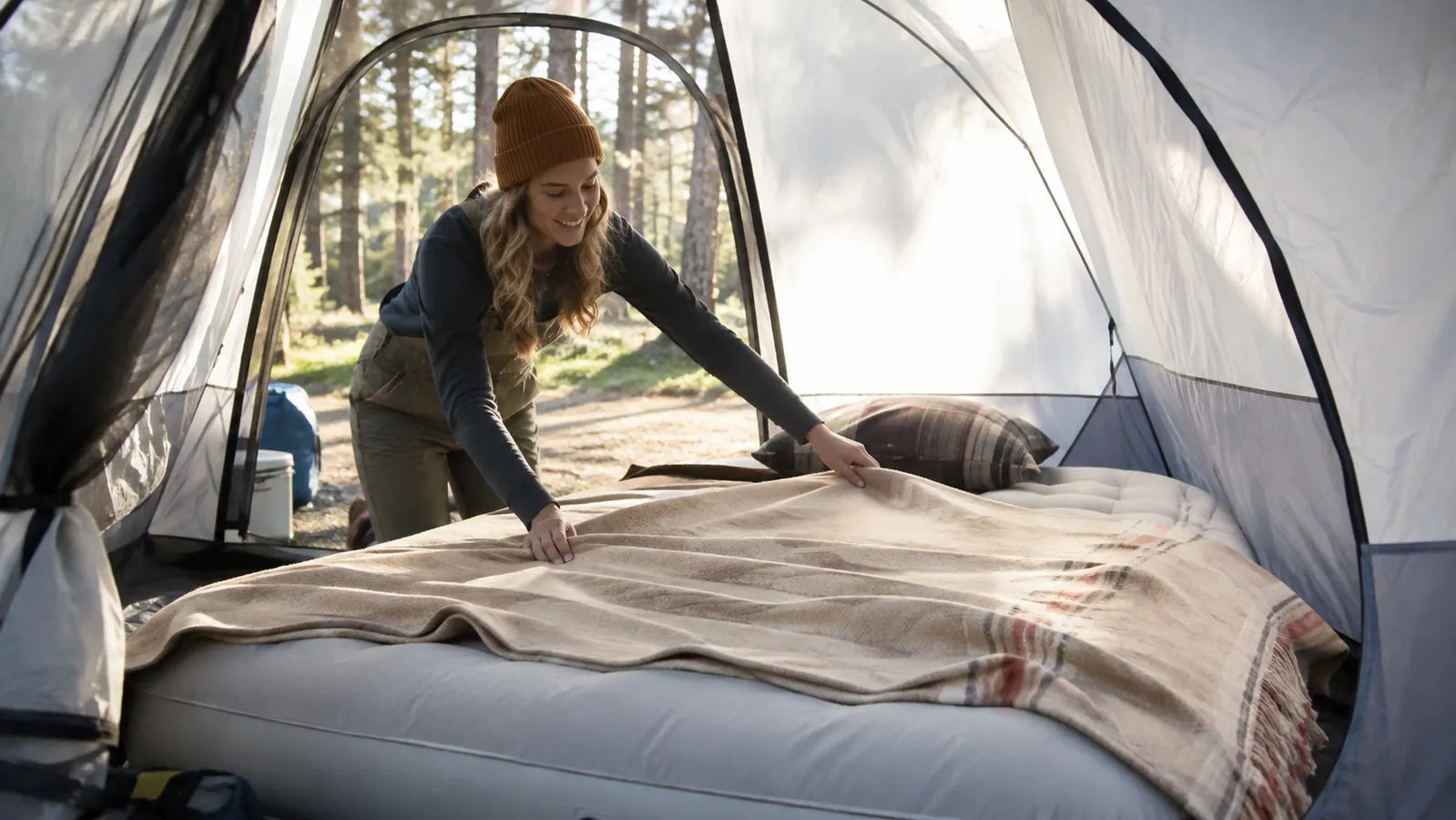
The fix is height. A raised inflatable mattress puts you up where the cold air collects below you instead of sucking warmth out of your back all night. The Intex Comfort Plush sits about 22 inches off the ground, which is high enough to make a real difference. It is built for car camping and truck camping, not backpacking, so nobody is carrying one up a mountain on their back. You are driving to the site anyway, so the weight does not cost you anything.
And here is the thing that surprised me the first season. Fitted sheets actually stay on it. The top is flocked, which sounds fancy but just means the fabric grips, so a normal queen fitted sheet does not slide off into a heap by morning. That is the difference between a padded cot you pitch on and an actual bed. It also takes the cold shock out of that first step out of the tent in the morning, because your feet hit something with a little give instead of the raw ground.
Step 3: Inflate It Firm, Then Back Off Half a Turn
The built-in pump on the Intex does the work in about two and a half minutes, which beats the hand pumps of my young camping days by a mile. Here is the mistake I see everyone make: they pump it rock hard, thinking firm equals supportive. Then they lie on a surface with the give of a parking lot and wonder why their hips ache by dawn.
I let it get close to full, then I deflate it just a touch, half a release on the valve. You want it firm enough that your hips and shoulders do not bottom out to the floor, but soft enough that it follows the shape of your body instead of fighting it. For me that is the sweet spot, and it took me one sore night to find it. The right firmness is the difference between waking refreshed and waking stiff, and it takes thirty seconds to adjust.
The built-in pump means you can fix it at midnight without hauling around a separate device. Too hard when you test it? Let a little air out. Too soft come morning? Right back on. You dial it in once, remember the feel, and you are set for the rest of the season. I have a number in my head now, that exact amount of release, and it means every site we pull into takes me no time at all to get right.
One warning that applies to almost any air mattress, including this one: keep it off sharp things. A tent floor is fine, but a stray stick or a raised tent stake underneath can put a pinhole in the bottom. Check the site floor twice, and if the ground is rough, a ground cloth under the tent is cheap insurance. It sounds obvious now, but it is exactly the kind of thing you only think about after your bed goes soft at 2 a.m.
Step 4: Layer Warmth the Way You Stack Firewood
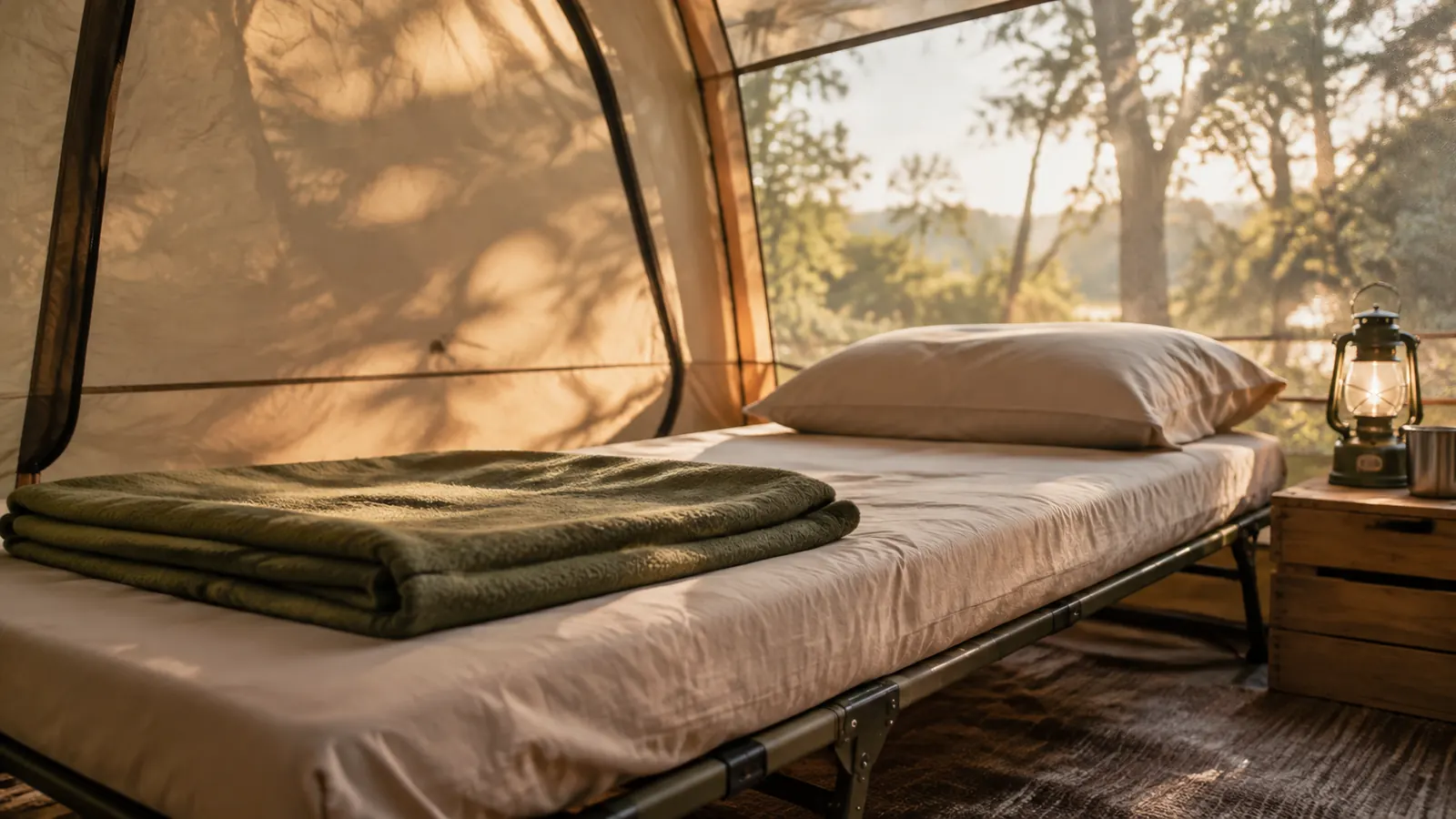
A good mattress keeps you off the cold floor, but warmth under you and over you does the sleeping. I layer it. The mattress goes down first. On top I put a folded blanket, the same one I grab off the couch at home, because the extra insulation under you matters more than the sleeping bag rating. Then the fitted sheet, then me, then whatever top layer the forecast calls for late October, early May, or a cool summer night.
People overthink the sleeping bag. A single thick bag is fine but it confines you, and a cold night turns you into an underground fossil inside it. I prefer a roomy bag or a quilt you can kick a leg out of, layered over a blanket. On a cold night I add a fleece throw. On a summer night I just sleep under the sheet. Being able to adjust is the whole game, and it is what keeps the setup working from the first frost to the last.
And do not neglect the pillow. A rolled hoodie gives you a crick in the neck every time, and it is the easiest thing in the world to fix. A real pillow on the Intex makes the setup feel like home, which is the entire point of a comfort-first campsite. Your neck holds your head for eight hours; it deserves better than a sweatshirt.
The cold does not just make you shiver. It makes every muscle in your back seize up, and you spend the night curled into a ball instead of actually sleeping.
Step 5: Handle the Noise and the Light Before You Crawl In
You can have the best bed in the campground and still lie awake staring at the ceiling of the tent. The last step is about the stuff that is not the mattress. Pick your site with your ears, not just your eyes. Give yourself some distance from the road, the bathhouse, and the generator, because campground sound carries farther than you think at two in the morning.
I pack a cheap eye mask and a pair of foam earplugs in a little pouch that lives in the tent bag, not in the truck where I will forget them. The mask makes the sunrise stop being the rooster, and the earplugs make the family in the next site stop being my alarm clock. Between a dark tent and quiet ears, I wake up closer to the time I want than to the time the campground wants.
Altitude can also be a sneak thief of sleep. If you are camping high, give yourself a slower first night, keep the heavy food light in the evening, and stay hydrated during the day. The bed is the foundation, but sleep lives in the whole setup working together, and the little things are what turn a decent night into a great one.
A final routine worth stealing: do one last walk around the tent before you settle in. Cinch down the rain fly so a breeze does not flap it all night, zip the door down so the bugs stay out, and make sure anything that will rust or rattle is put away. The few quiet minutes it takes save you an hour of getting up to fix a noise you should have killed before you lay down.
What Else Helps
Two small habits stretch a good setup further. First, when you break camp, let the mattress air out for a few minutes before you roll it, so you do not trap the night's moisture inside. Pack it dry and it will not develop that damp smell that turns the second trip sour. Second, when you get home, keep it rolled loosely and flat, not crammed under a pile of coolers, and it will keep holding air season after season.
And if you are worried about a slow leak, test it before the trip, not at midnight. Inflate it in the living room, let it sit a few hours, and see if it holds. That one home check has saved me more than one weekend, and it beats discovering the problem at two in the morning on the far side of a long drive. A bed you trust is a bed you sleep on, and there is nothing worse than lying awake waiting for the deflate.
Give the setup one honest weekend. Level the ground, get yourself up off the cold, dial in the firmness once, layer the warmth, and quiet the noise. You will wake up on Sunday morning rested enough to actually enjoy the fire you build, and you will wonder why you suffered through all those stiff-backed trips before you figured it out. That is the whole goal, a campsite that sleeps as well as it camps.
Sleep through your next camp night instead of dreading it
The whole setup comes down to a raised mattress that keeps you off the cold ground, and the Intex Comfort Plush is the one I recommend to every comfort-first camper. It inflates on board, holds a fitted sheet, and packs flat for the truck. Give your back the same afternoon off it gets at home.
Amazon Check Today's Price on Amazon →